
Glenn
Logan
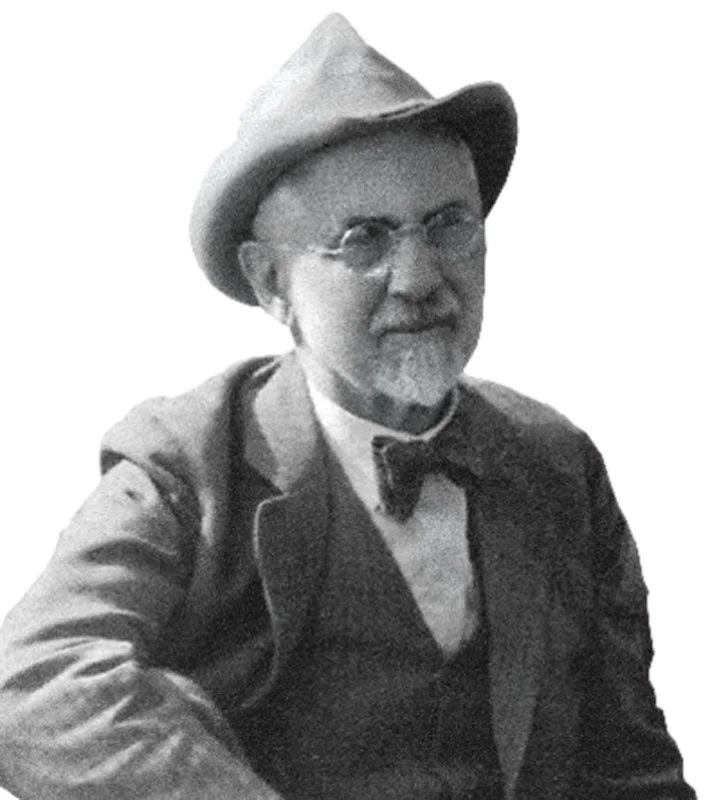
Joseph Henry Sharp (1859–1953)
Known by some as an artist who never stood still except to paint, Joseph Henry Sharp worked at a feverish pace and produced an astounding amount of art over his lifetime. It is estimated that Sharp completed around 10,500 works of art, including etchings, monotypes, pastels, and watercolors in addition to the many oil paintings that made him famous.
When asked by a relative late in life for biographical information, Sharp is reputed to have replied, “I worked hard and had a lot of fun doing it.” As art historian Marie Watkins explains, Sharp didn’t want to be described as “eminent” or a “great artist,” but he did express a desire to be known as a Taos painter, “since I discovered it and told the other boys” (presumably Bert Phillips and Ernest Blumenschein).
Henry Sharp’s lifelong attachment to Taos began in 1893 during a buckboard ride he took with the American painter John Hauser to the pueblos of Tesuque, Pojoaque, San Iledefonso, Santa Clara, Ohkay Owingeh, and Taos. One of the earliest Euro-American artists to visit Taos, Sharp is said to have regarded Native peoples as the “real old masters.” In the West, he sketched members of the Pueblo, Umatilla, Klickitat, Shoshone, and Ute peoples. Among the Plains tribes, he painted portraits of Crow, Sioux, Cheyenne, Blackfeet, and Nez Perce tribal members.
With the help of Samuel Reynolds, “Indian agent” at Crow Agency in Montana, who was sympathetic with Sharp’s desire to record Crow life, the artist was able to build a studio log cabin, called Absarokee Hut, on government land. He lived and worked there rent-free from 1905 to 1922, when he was allowed to buy the cabin.
Sharp grew up in Ironton along the Ohio River and attended the Cincinnati Art Academy, followed by the Royal Academy of Fine Arts in Antwerp, Belgium, and the Munich Academy of Fine Arts. From there he went to Paris, attending the Académie Julian, where he met Phillips and Blumenschein. In 1915 he became one of the founders of the Taos Society of Artists and its most senior member.
Sharp’s hearing was damaged in a swimming accident when he was young and worsened over time until he was completely deaf. He learned to read lips and carried a writing pad with him. His first wife, Addie Josephine Byram, often acted as his spokesperson and interpreter. After Addie died of pneumonia in 1913 at age forty-nine, Sharp married her younger sister, Louise.
Between 1892 and 1903 Sharp was an instructor at the Art Academy of Cincinnati, where women figured prominently among his pupils.
In 1909 Sharp bought the Luna Chapel attached to the Couse House to use as his art studio. In 1915, he built a second, much larger studio on the property. Both structures exist to this day and are open to the public as part of the Couse-Sharp Historic Site.
Sharp had no children, and when he died in 1953, the Couse family inherited his Taos home and both studios.
Sharp Gallery
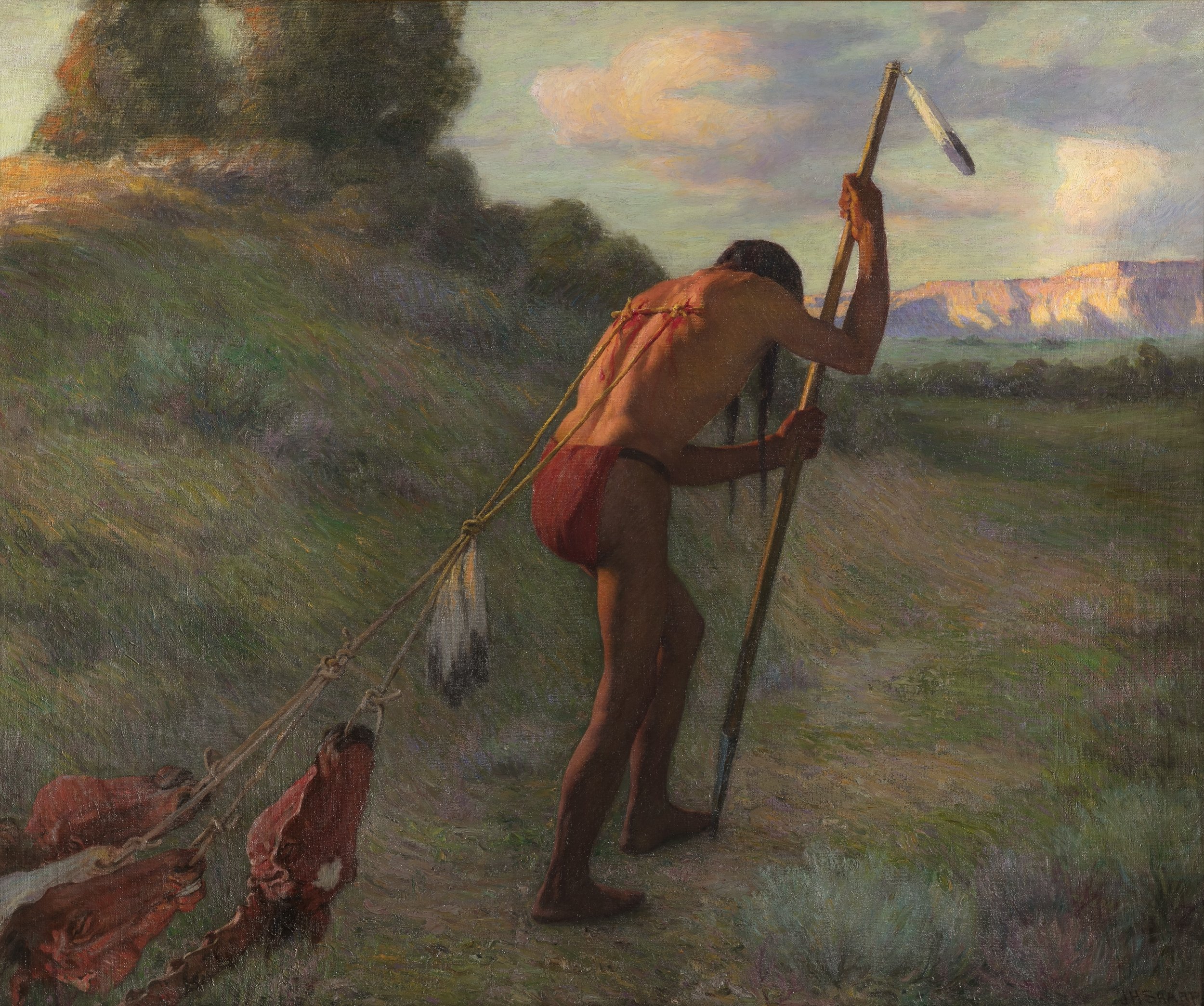
The Stoic
1914, oil on canvas, 52 ½ x 61 ½ in. Collection of the New Mexico Museum of Art. Gift of Joseph Henry Sharp, 1917 (395.23P)
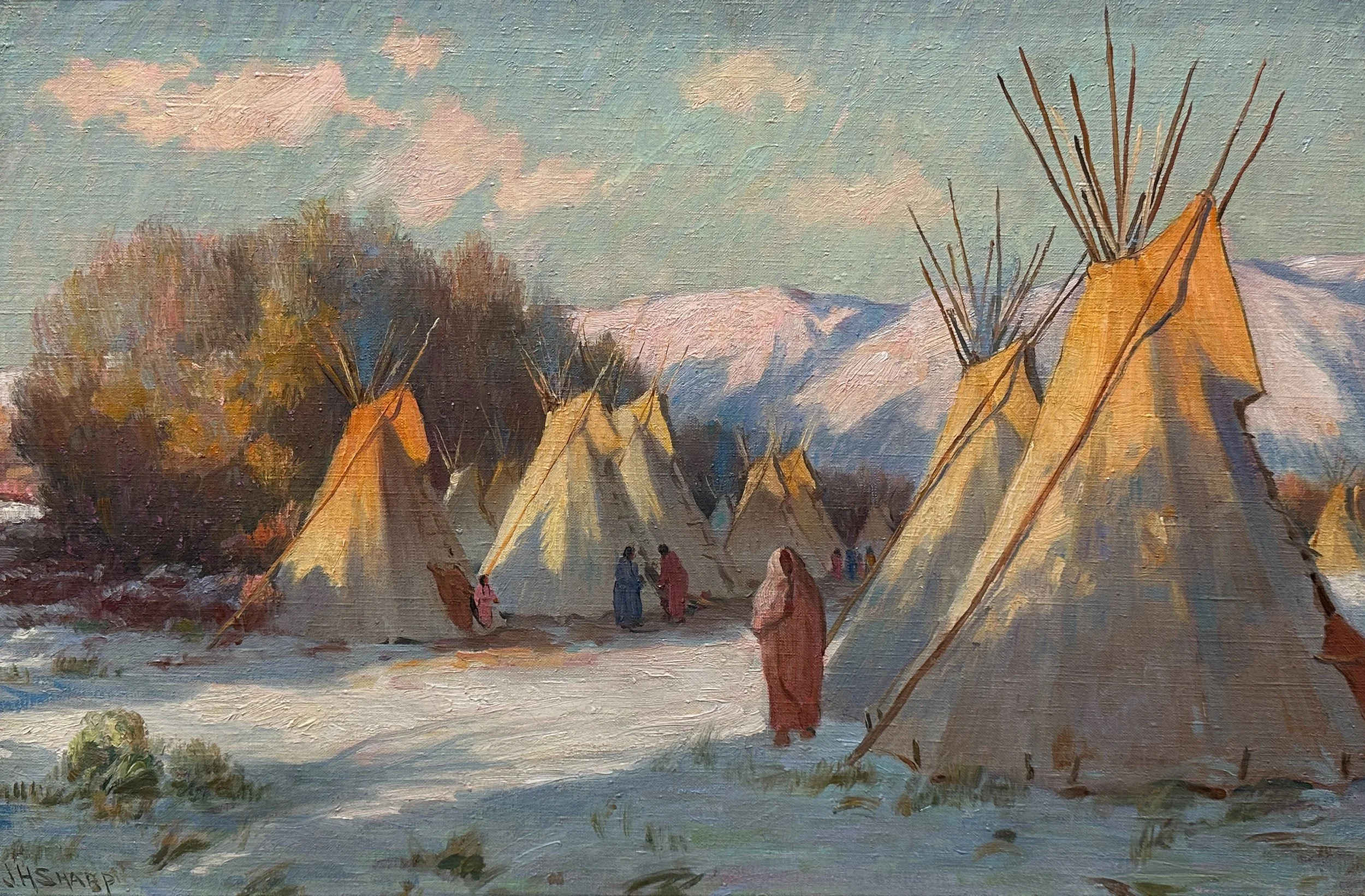
Teepees in Winter Montana
oil on canvas, 16 x 24 in. Collection of Koshare Art Museum, La Junta, CO
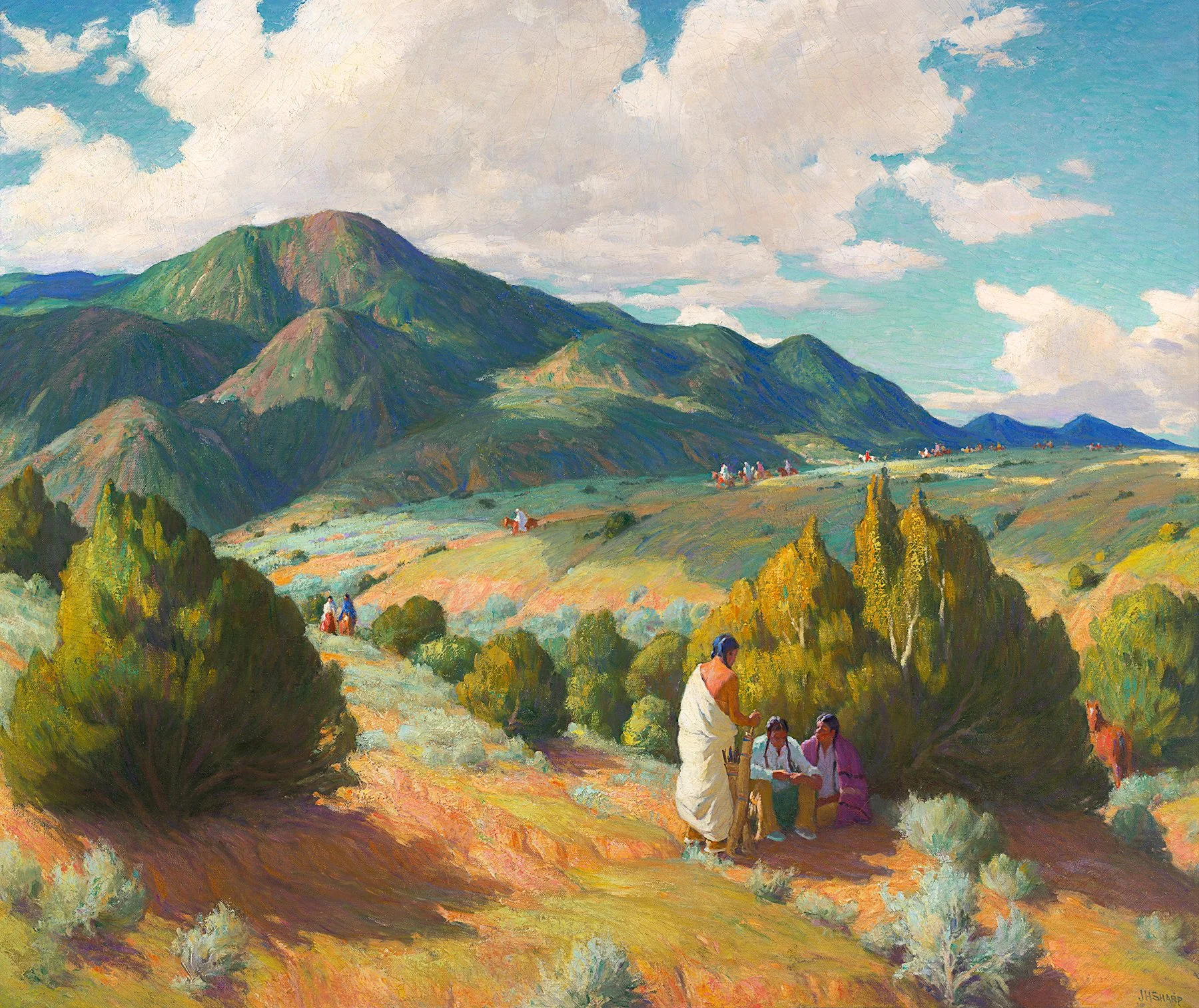
New Mexico Sand, Sage, Cedar, Clouds, and Mountains
Oil on canvas, 40 x 48 in. Courtesy of TAMUK H. R. Smith Ranch, LLC/King Ranch® Institute for Ranch Management/Texas A&M University–Kingsville Foundation.