
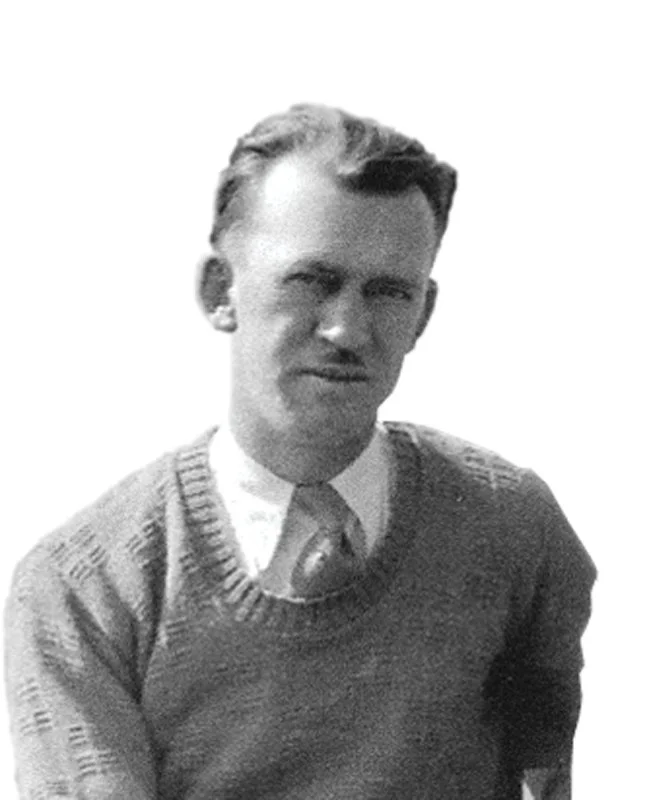
Ernest Martin Hennings (1886–1956)
Martin Hennings once described his entry into fine art as follows:
“One day at age twelve or thirteen, a friend and I wandered into the Art Institute of Chicago, not really knowing what it was. While there, I found a pamphlet explaining that art could be studied. That had never occurred to me.”
At that point, Hennings decided to become an artist.
Hennings was born of German parents in Penns Grove, New Jersey. He studied at the Art Institute of Chicago for five years and at the Academy of Fine Arts in Munich for two additional years. When he applied for a passport to travel to Germany, the clerk described him as “a twenty-six- year-old, five feet 11 inches tall, with green eyes, auburn hair, a prominent nose and ordinary mouth.”
After returning to Chicago, Hennings worked as a muralist and a commercial artist while making a reputation for himself as a painter. He was soon sponsored by the city’s mayor, Carter H. Harrison, to spend a year painting the American West. He began at the Grand Canyon, moving on to Laguna Pueblo, Santa Fe, Ohkay Owingeh Pueblo, and Taos. His task was to complete ten canvases.
By 1921, Hennings had made Taos his permanent home. He joined the Taos Society of Artists in 1924. That same year he met Helen Otte, an employee at the Chicago department store of Marshall Field’s, where a selection of Hennings’s works was on display. The couple married two years later.
After a remarkably successful career, Hennings was interviewed in 1942 by Ruth Watson, a magazine writer who had traveled to Taos to track him down. Her assessment: “For an artist of first rank, recipient of many honors throughout the country, Martin Hennings is one of the most unpretentious people I have ever known.”
Hennings’s friends also knew him as an avid outdoorsman who loved a good game of chess.
Hennings Gallery
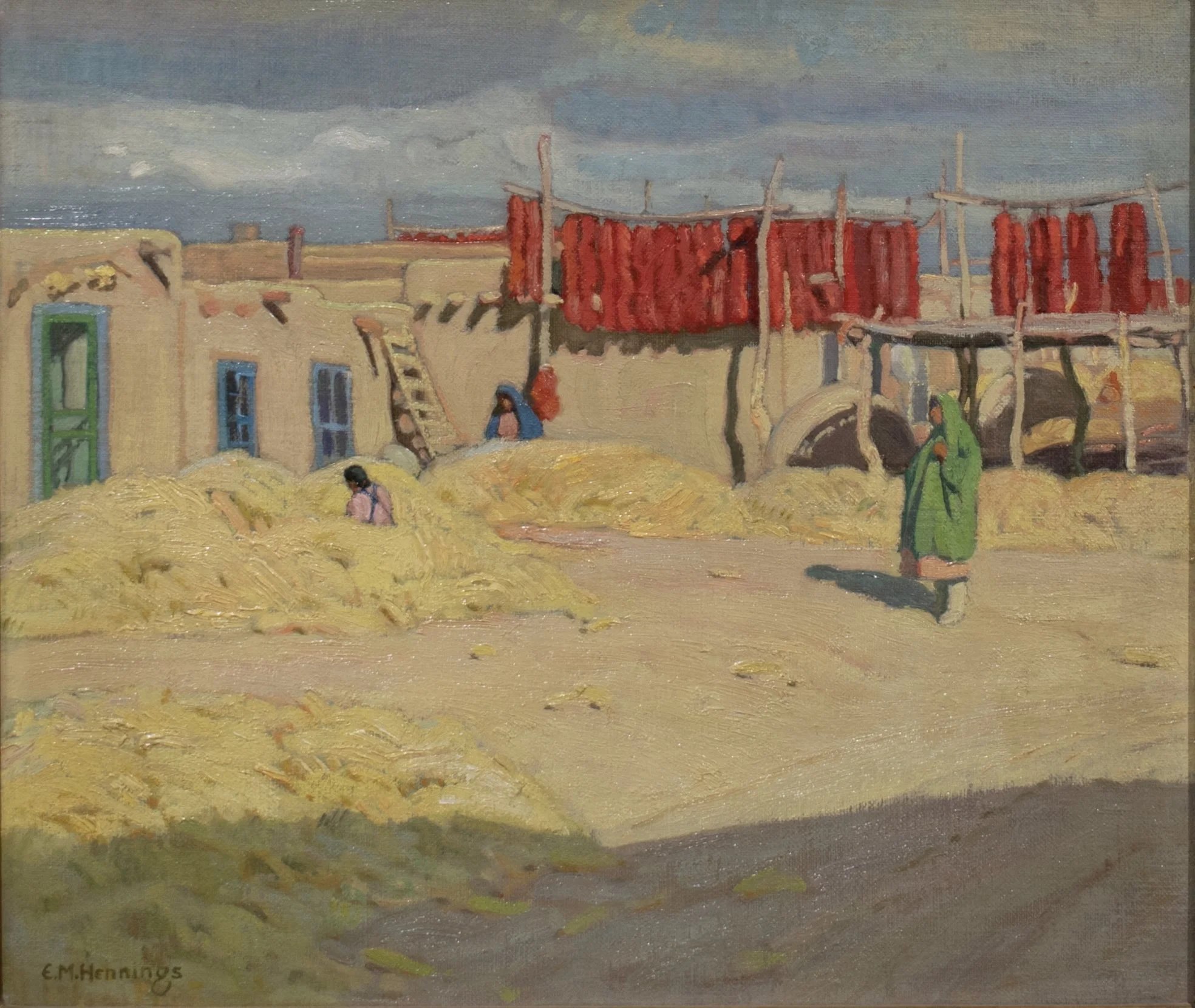
Drying Chiles
Late 1920s, oil on canvas, 12 x 14 in. Courtesy of the Panhandle-Plains Historical Museum, Canyon, Texas.
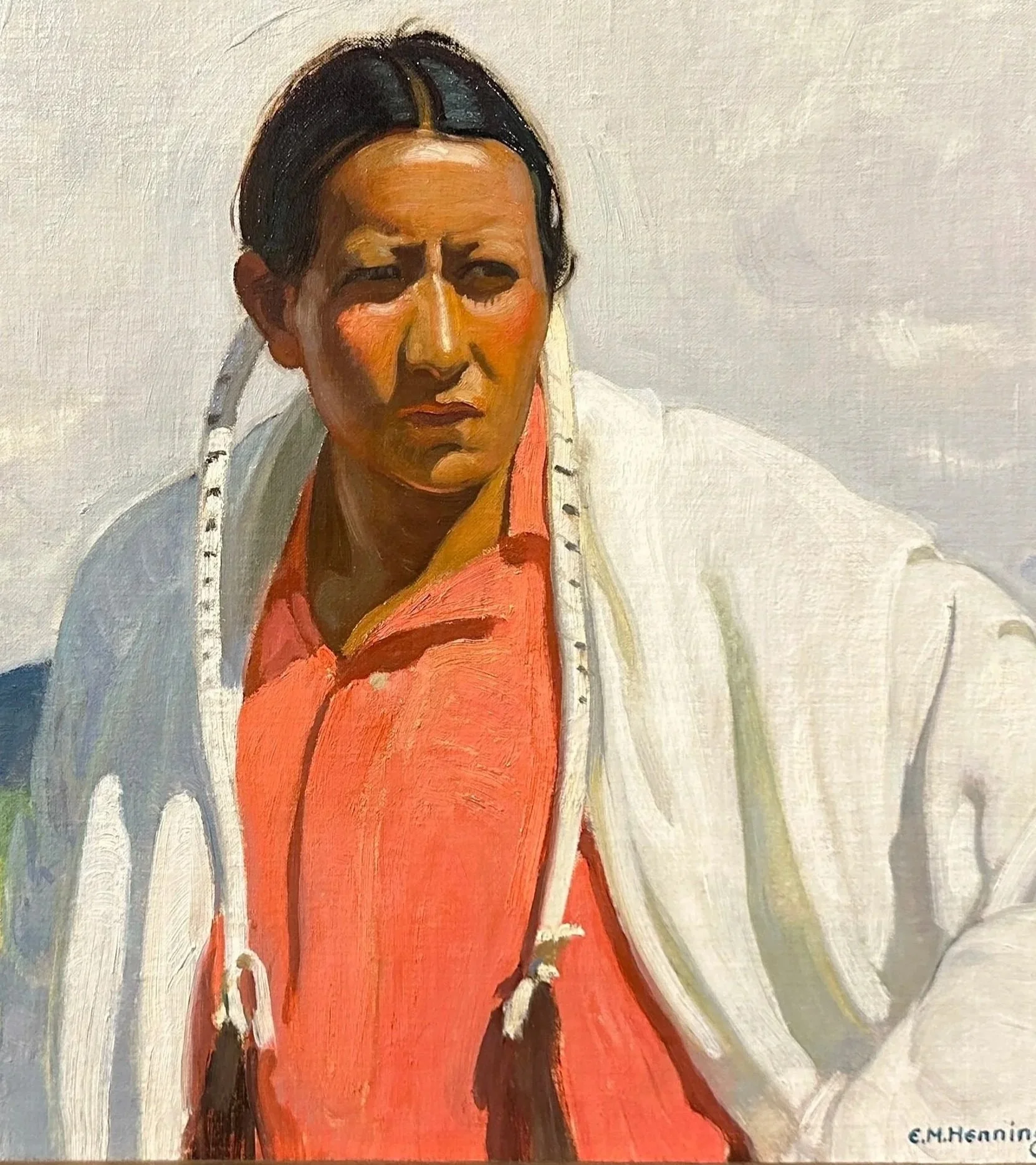
Frank Samora
Oil on board, 13 x 13 in. Collection of Koshare Art Museum, La Junta, CO.
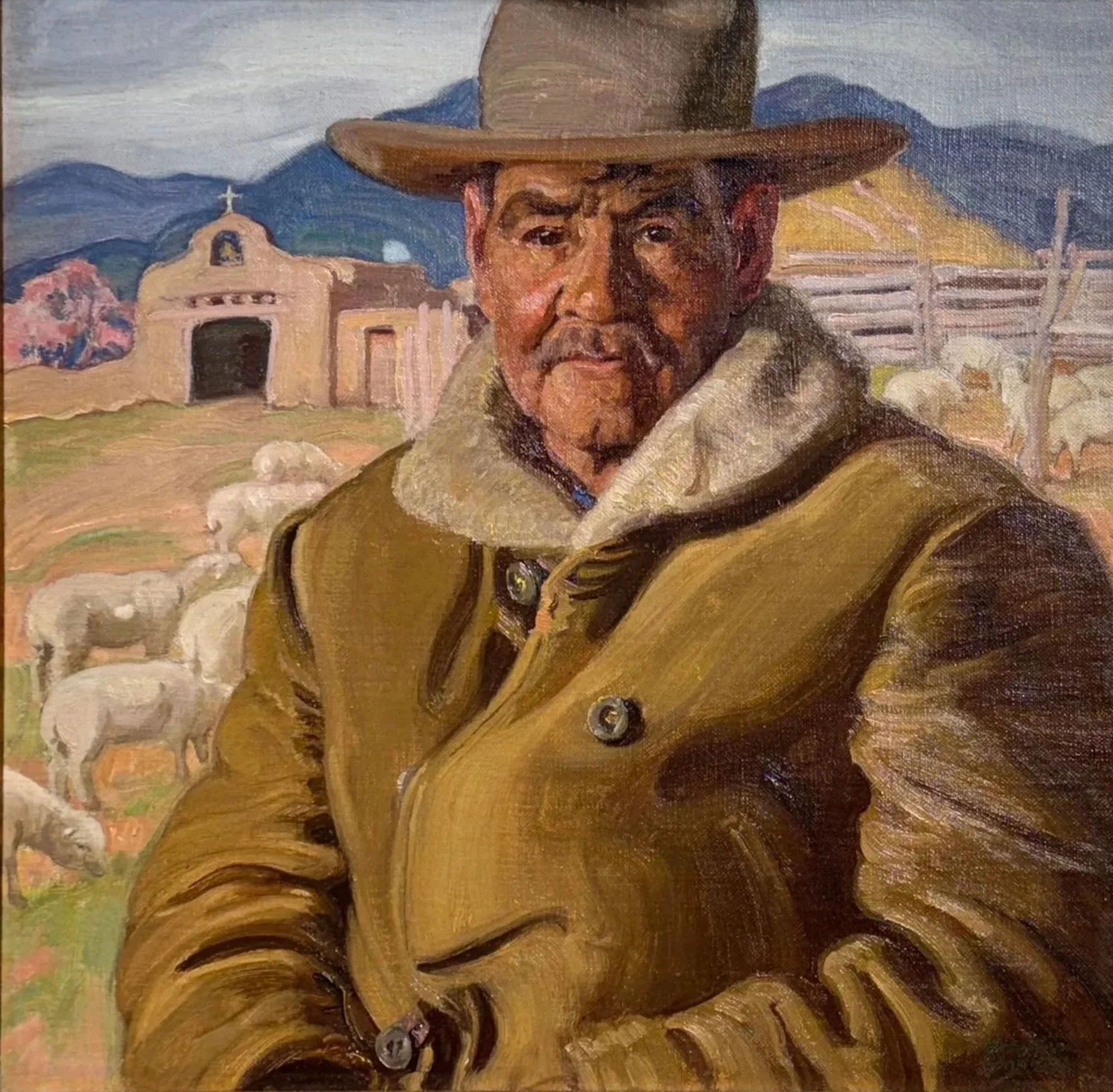
Damian Mondragon
c. 1935 Oil on canvas 14 x 14 inches Tia Collection