
E. Martin Hennings
Drying Chiles
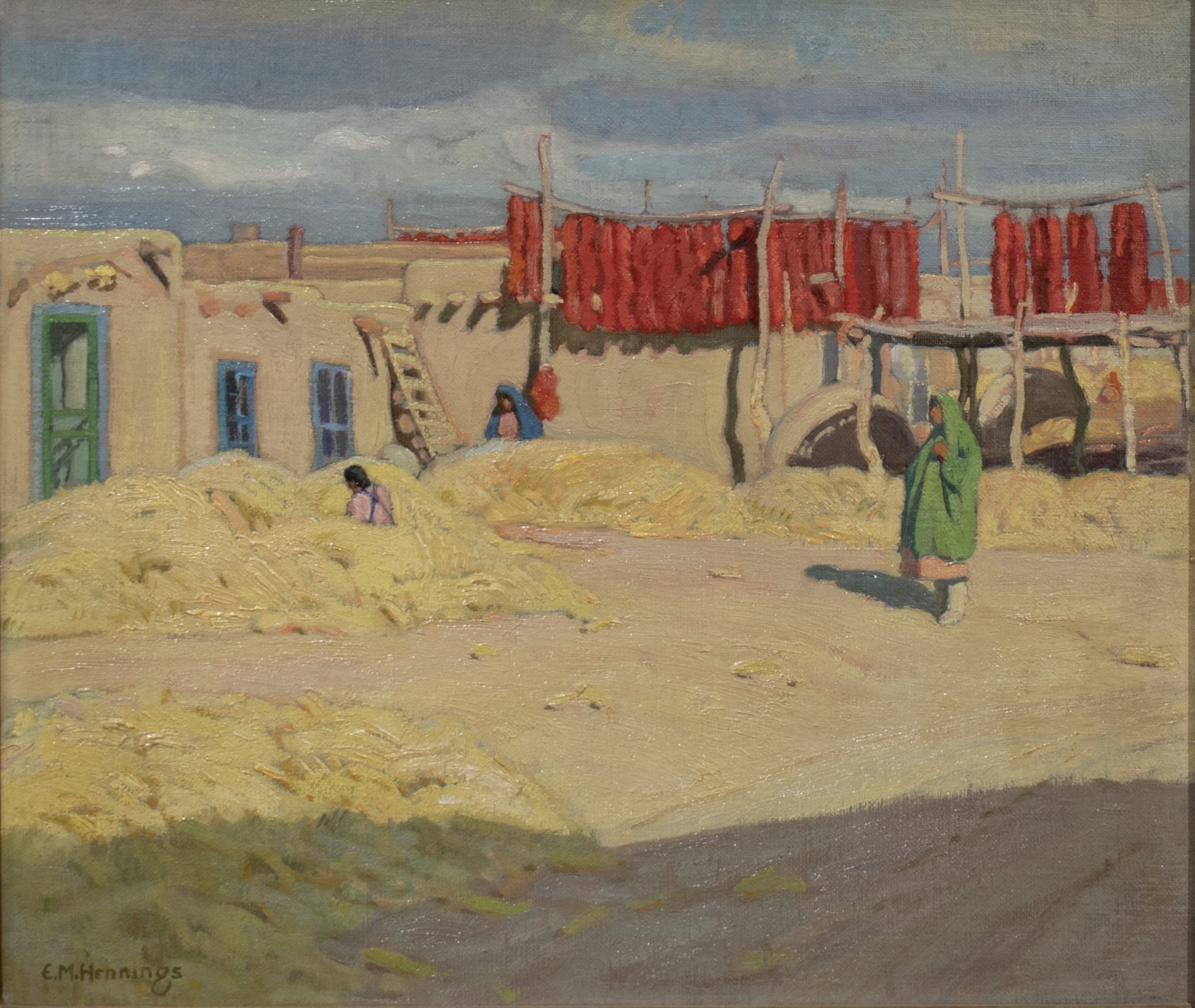
E. Martin Hennings, Drying Chiles, late 1920s, oil on canvas, 12 x 14 in. Courtesy of the Panhandle-Plains Historical Museum, Canyon, Texas.
Chile has been domesticated for 7,000 years in the Americas, and New Mexicans consume more chile per capita than any other group in the United States. The state’s climate is optimal for growing spicy, complexly flavored chiles. Hundreds of varieties are grown, including the long peppers for which New Mexico is well known.
Red and green chile peppers represent two developmental stages. The plant produces green fruit, which turns red if left to ripen. The red pods are then dried, traditionally in the sun. They can be spread on roofs or on the ground, but to avoid pilfering and contamination by animals, people began to tie them together in strings (ristras) to hang against a wall, along the eaves of a portal (porch), or from special racks as in the painting.
Today, ristras hang outside and inside homes all over New Mexico, both for use in cooking and as decoration, and are said to bring good health and good luck.