E. I. Couse, Ben Lujan, and the influence of ephemera
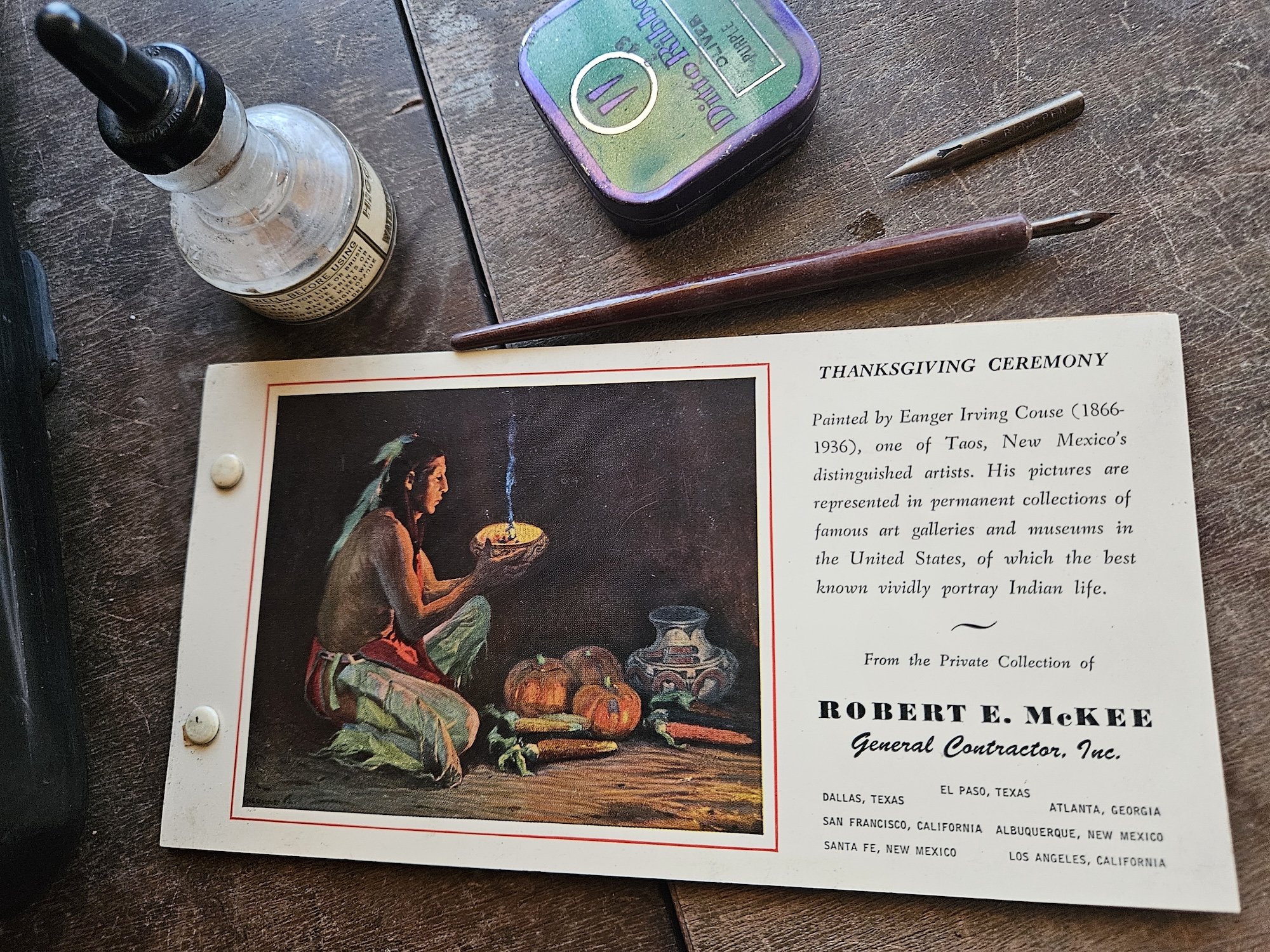
Above: Promotional cover for blotter paper with a 1923 Couse painting featuring Ben Lujan. The image was licensed after Couse’s death.
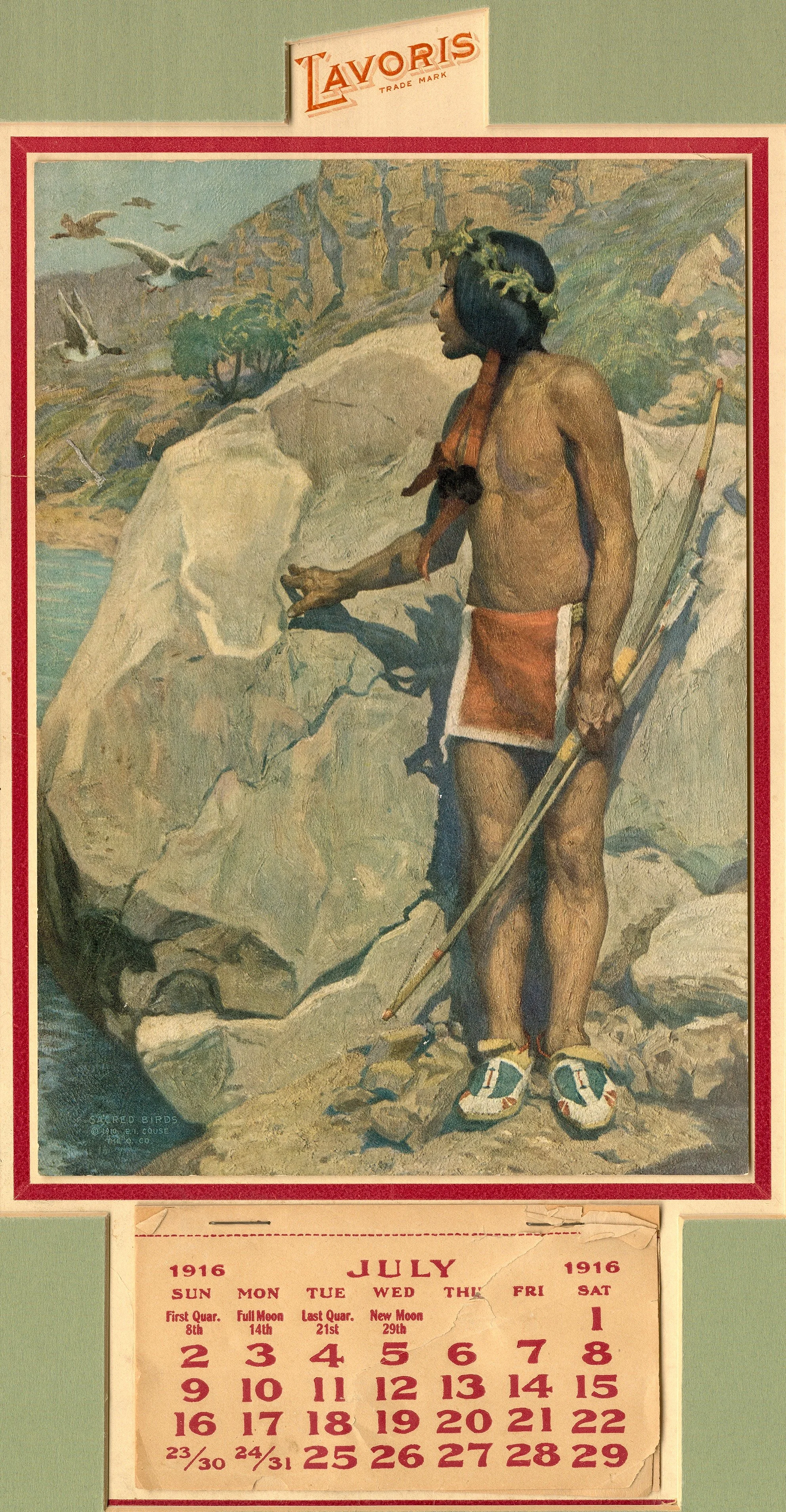
Below: Lavoris Mouthwash advertising calendar, 1916. Advertising calendars carried Couse’s paintings into homes, businesses, and everyday public spaces. The model depicted in this image is Jerry Mirabal of Taos Pueblo, whose likeness became part of a commercial campaign far removed from the original setting.
TSA members’ interpretations of their neighbors, landscapes, and architecture became part and parcel of how other Americans saw our region, and none was more. prominent in this arena than Eanger Irving Couse. His work, featuring Ben Lujan and other Taos Pueblo models, was reproduced in decorative lithographs and in everyday ephemera such as grocery store and bank calendars, educational materials, ink blotters, dining car menus, magazines, and brochures.
Images painted by Couse also appeared in Beacon Blanket window displays. Beacon was the largest textile mill in the country, and their advertising campaign with Couse ran from 1916 through 1930. During that time, they commissioned fourteen paintings. Taos Pueblo members who modeled for his paintings were featured in cardboard cutouts that appeared in department store windows nationally and internationally, selling to an aspiration of the handmade and the pre-industrial.
Couse’s two dozen Atchison, Topeka & Santa Fe calendar images helped the railway and the Fred Harvey company shape a national idea of the Southwest that aimed to draw tourists out of the cities and towns of the East. One annual calendar could reach as many as 300,000 homes, schools, and businesses.
Through mechanical reproduction, Couse’s paintings traveled widely in railway promotions, Fred Harvey materials, bank and grocery calendars, ink blotters, dining car menus, department store window displays, brochures, and magazines. Many of these reproductions featured Ben Lujan and his son Eliseo, models from Taos Pueblo who cultivated lifelong relationships with the Couse Family. Couse’s grandchildren even considered Ben Lujan to be a surrogate father to them. A single Couse image of these Taos people could outlive its original purpose and reappear for decades in the everyday spaces of American life.