
Glenn
Logan
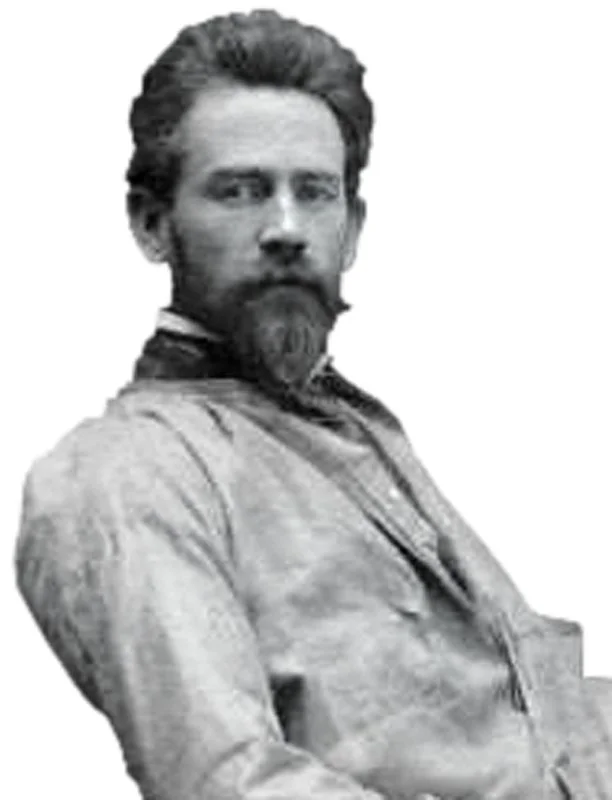
Julius Rolshoven (1858–1930)
Unlike most members of the Taos Society of Artists, Julius Rolshoven had spent most of his life abroad, principally in Italy, France, and England. Arriving in Taos in 1916, Rolshoven remarked, “I have travelled all over Europe and North Africa in search of ‘atmosphere,’ but nowhere else have I seen nature provide everything, even the conception, as it does in New Mexico.” Even so, he spent just five years in Taos and stayed only during the summer months.
When the Rolshovens first arrived on the Chili Line railroad at the transfer station manned by Long John Dunn, he and his wife couldn’t have been more out of place. Wearing elegant clothes and dressed all in white, the couple was dismayed to learn that their luggage would not arrive in time to change for dinner.
Rolshoven’s father emigrated to Detroit from Germany, where he had been a master goldsmith, the descendant of generations of prominent goldsmiths.
Although the young Rolshoven showed promise as a pianist, he also displayed considerable talent in drawing and studied eventually at the Düsseldorf Academy of Fine Arts. While pursuing courses in portraiture, Rolshoven found himself in need of a skull in order to more fully understand the structure of the head. He managed to obtain one from a local graveyard.
In Paris, he entered the atelier of William-Adolphe Bouguereau at the Académie Julian, where he met Irving Couse, another Michigander. Neither artist could have imagined that in the far distant future, Couse’s son, Kibbey, would marry one of Rolshoven’s nieces, Lucille Wrenn. Kibbey and Lucille were Virginia Couse Leavitt’s parents.
By all accounts, Rolshoven was a larger-than-life figure. One observer described him as an accomplished painter possessed of an urbane philosophy, a charm of manners, and brilliant conversational powers. He was also a successful teacher of art on two continents.
Rolshoven Gallery
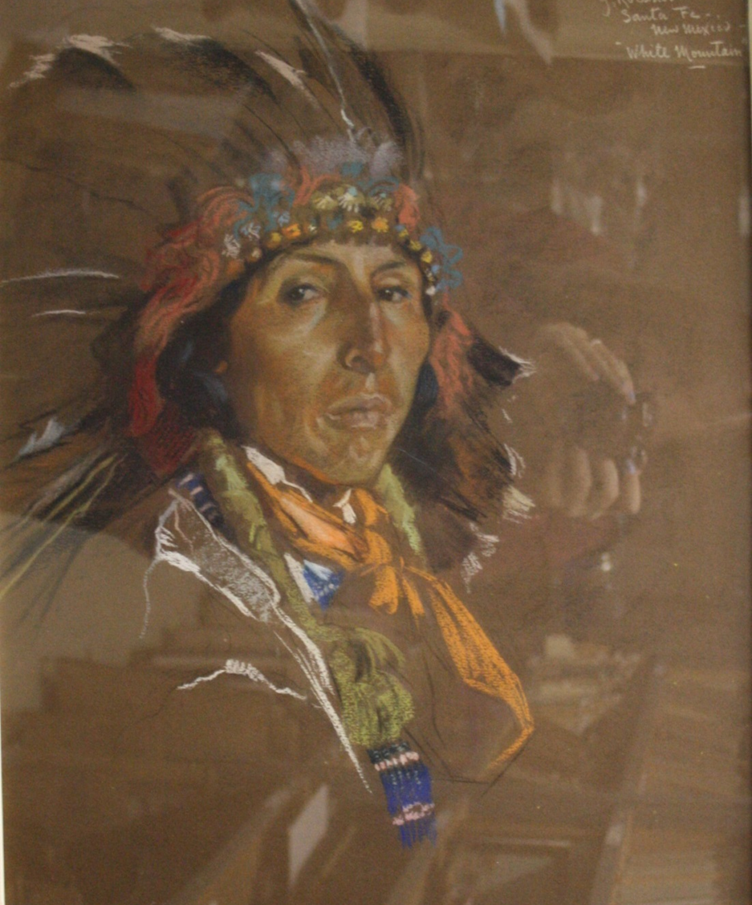
White Mountain
1917, Pastel on colored board, 22 ½ x 18 ½ in. Courtesy of the Panhandle-Plains Historical Museum, Canyon, Texas.
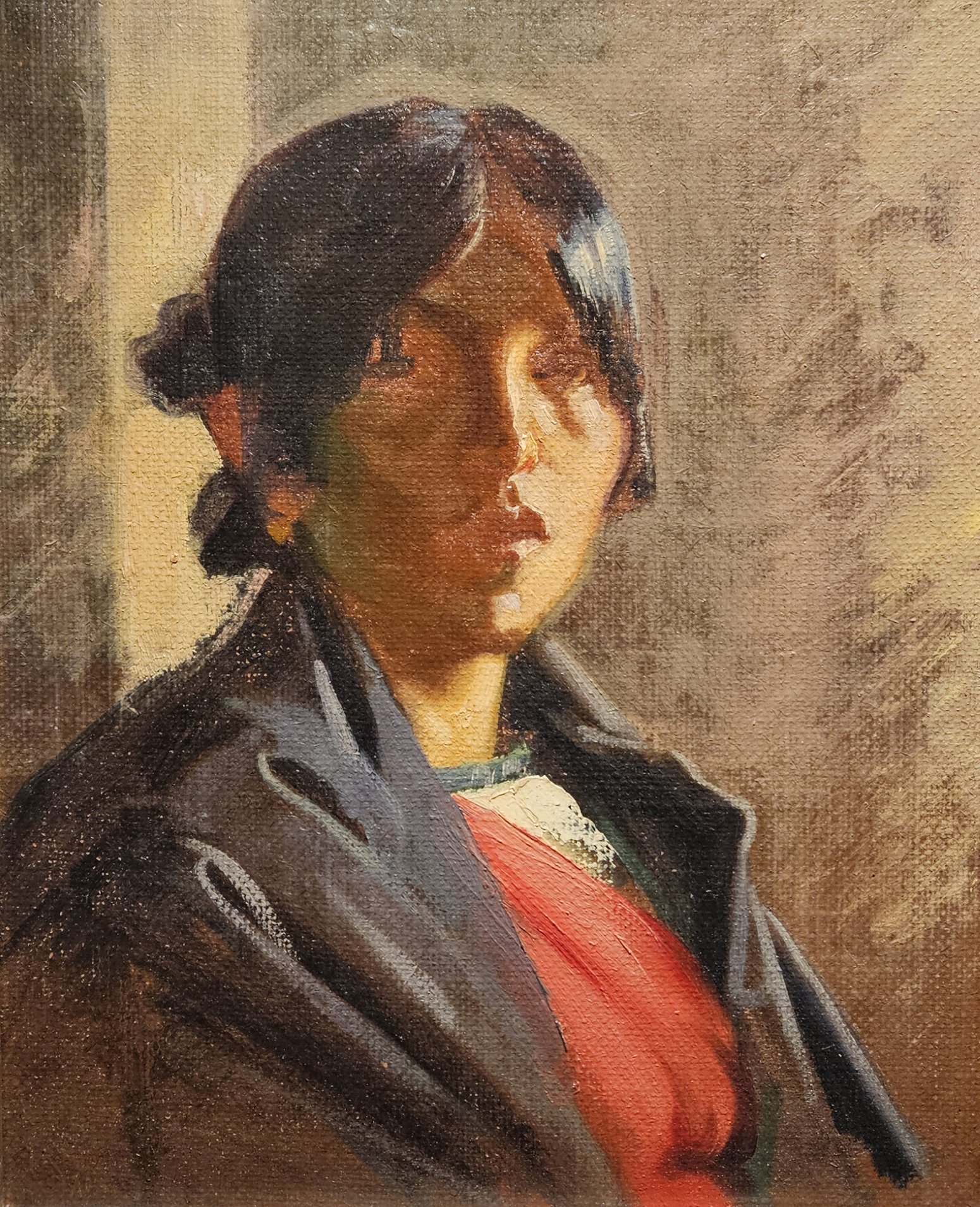
Indian Woman of Taos Pueblo
Oil on canvas, 19 x 15 in.