
Glenn
Logan
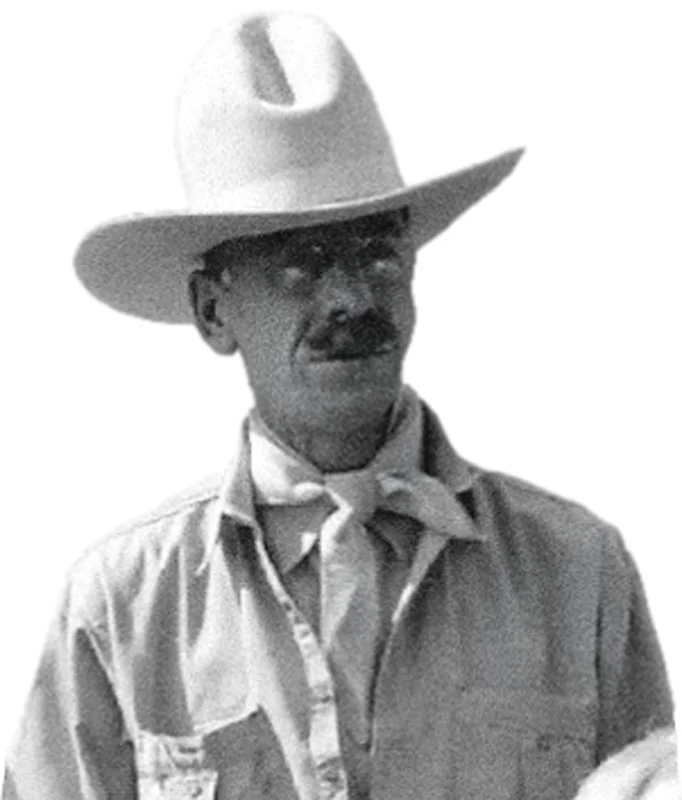
W. Herbert “Buck” Dunton (1878–1936)
Born in Augusta, Maine, Buck Dunton worked as a ranch hand when he was young in locations stretching from Montana to Mexico and then became one of the most prolific popular Western illustrators in the United States.
When the young Dunton accompanied his grandfather on outings in the New England countryside, he reportedly often carried a sketchpad along with his rifle and rod. As historian Michael Grauer notes, Dunton remembered building “camps” in the woods with his brother and a cousin while pretending to live like “lonely hunters . . . slinking about the pasture in broad-brimmed hats, our belts bristling with discarded pistols and butcher knives borrowed from the kitchen.”
The woman Dunton married in 1900, Nellie Hartley, appears to have been a fit match for an artist with Dunton’s taste for adventure. According to family lore, she once killed a charging black bear at six feet with a pistol, in the dark.
After studying at the Cowles Art School in Boston, Dunton moved to New York City where he became widely known and sought after as an illustrator of Western subjects. His sudden rise as a magazine illustrator coincided with the cowboy craze that swept the nation following the publication of Owen Wister’s The Virginian in 1902 and the increasing popularity of painters like Frederic Remington and Charles Russell.
In 1912, Dunton studied briefly at the Art Students League, where his teacher, Ernest Blumenschein, told him about Taos. Once relocated to the West, Dunton accepted few commissions for illustrations, choosing to focus instead on “preserving the life of the Old West” through his paintings. He became known especially for his canvases depicting dramatic outdoor scenes of cowboys and horses, wildlife, and mountain men. Dunton himself was often outfitted with a ten-gallon hat, cowboy boots, and chaps.
Suffering from poor health and financial losses during the Great Depression, he turned to lithography and worked on murals financed by the New Deal.
His view of the women ranch hands he had met was that they could ride and rope as well as the men.
Dunton Gallery
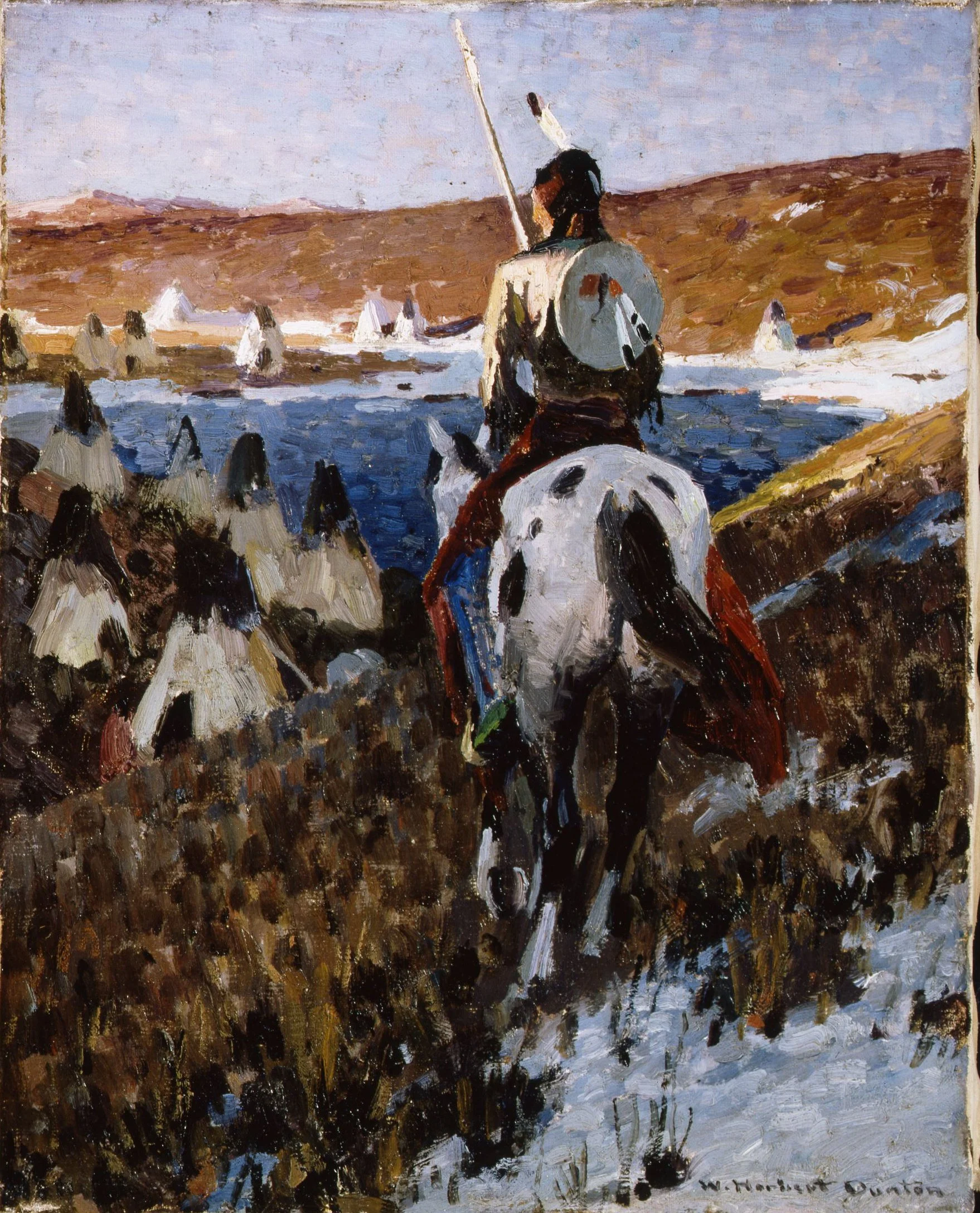
Winter Camp of the Sioux
Oil on canvas, 20 x 16 in. Courtesy of the Panhandle-Plains Historical Museum, Canyon, Texas.
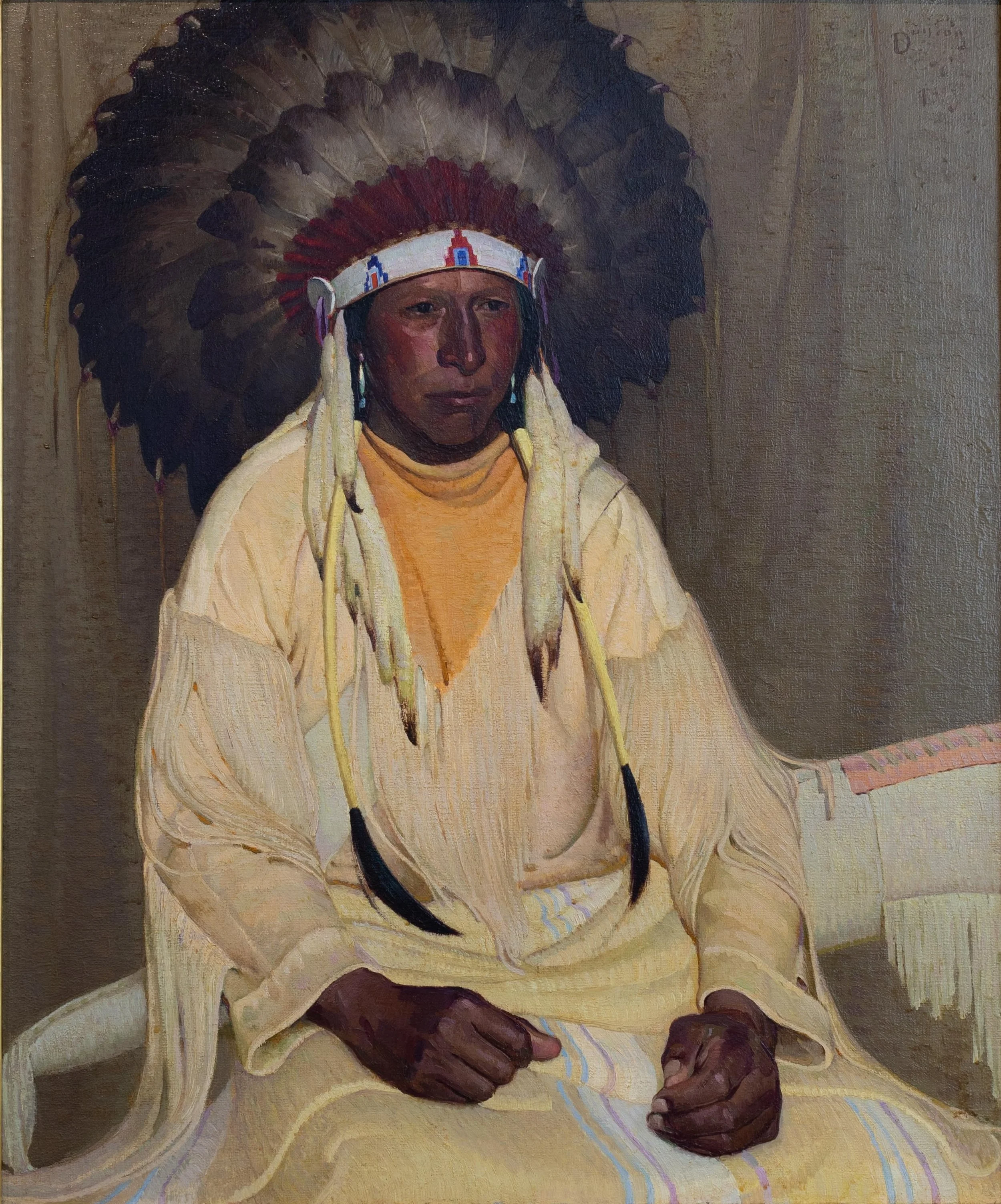
Portrait of John Reyna
Courtesy Taos Art Museum at Fechin House