
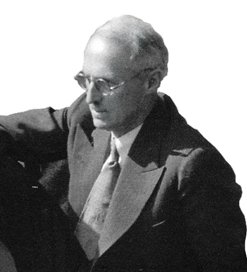
Ernest Leonard Blumenschein (1874–1960)
Born in Pittsburgh, Pennsylvania, Ernest Leonard Blumenschein grew up in Dayton, Ohio, where his father was director of the Dayton Philharmonic Orchestra. When the young Blumenschein graduated from high school, he received a scholarship to study violin at the College of Music in Cincinnati. Blumenschein enrolled to study violin but was more taken by a course he attended at the Cincinnati Art Academy. In 1892, he moved to New York to study art full time at the Art Students League, supporting himself by playing violin for the New York Philharmonic Orchestra under the baton of Antonín Dvořák.
In 1894, Blumenschein enrolled in the Académie Julian in Paris. There he met Bert Phillips and J. H. Sharp. After hearing Sharp’s account of his recent trip to Taos, the two younger artists set out for the West, making the now-famous trip from Denver toward Mexico in a wagon that broke down—fortuitously—just outside of Taos. Blumenschein stayed in Taos for only three months, returning to New York to resume his career as an illustrator for popular magazines and books, including two short stories by Jack London.
Blumenschein returned twice to Paris for further studies at the Académie Julian, once in 1899 and then for a prolonged stay from 1902 to 1909. In France he met and married artist Mary Shepherd Greene and returned with her to New York, where the couple worked together as illustrators. Their daughter, Helen Greene Blumenschein, worked in a wide variety of media and is especially well-known for the prints she exhibited nationally and internationally from 1936 to 1945.
Beginning in 1910, Blumenschein spent summers in Taos but didn’t settle here permanently until 1919.
During World War I, Blumenschein led the national effort to produce range-finder paintings, large landscape paintings used successfully to help train military gunners in an indoor setting. The paintings were also used to teach soldiers how to draw military maps in the field. Blumenschein helped draft and organize artists across the U.S. for this project, especially in Taos and Santa Fe. In Taos alone, fifteen range-finder paintings of landscapes in France were produced in 1918.
Blumenschein also served as captain of the Taos baseball team.
Blumenschein Gallery
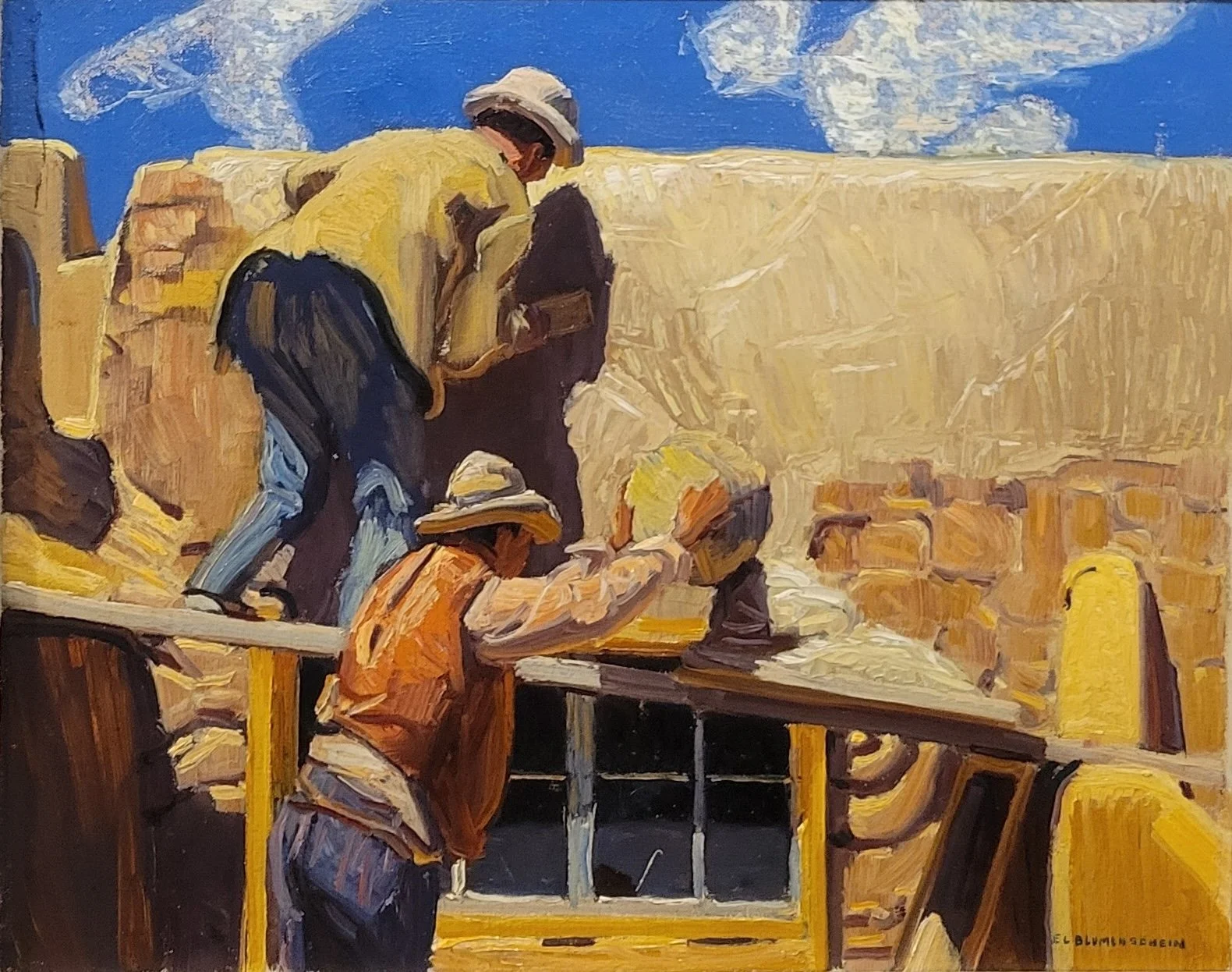
The Plasterers
1951, oil on canvas, 16 x 20 in. Collection of Koshare Art Museum, La Junta, CO.
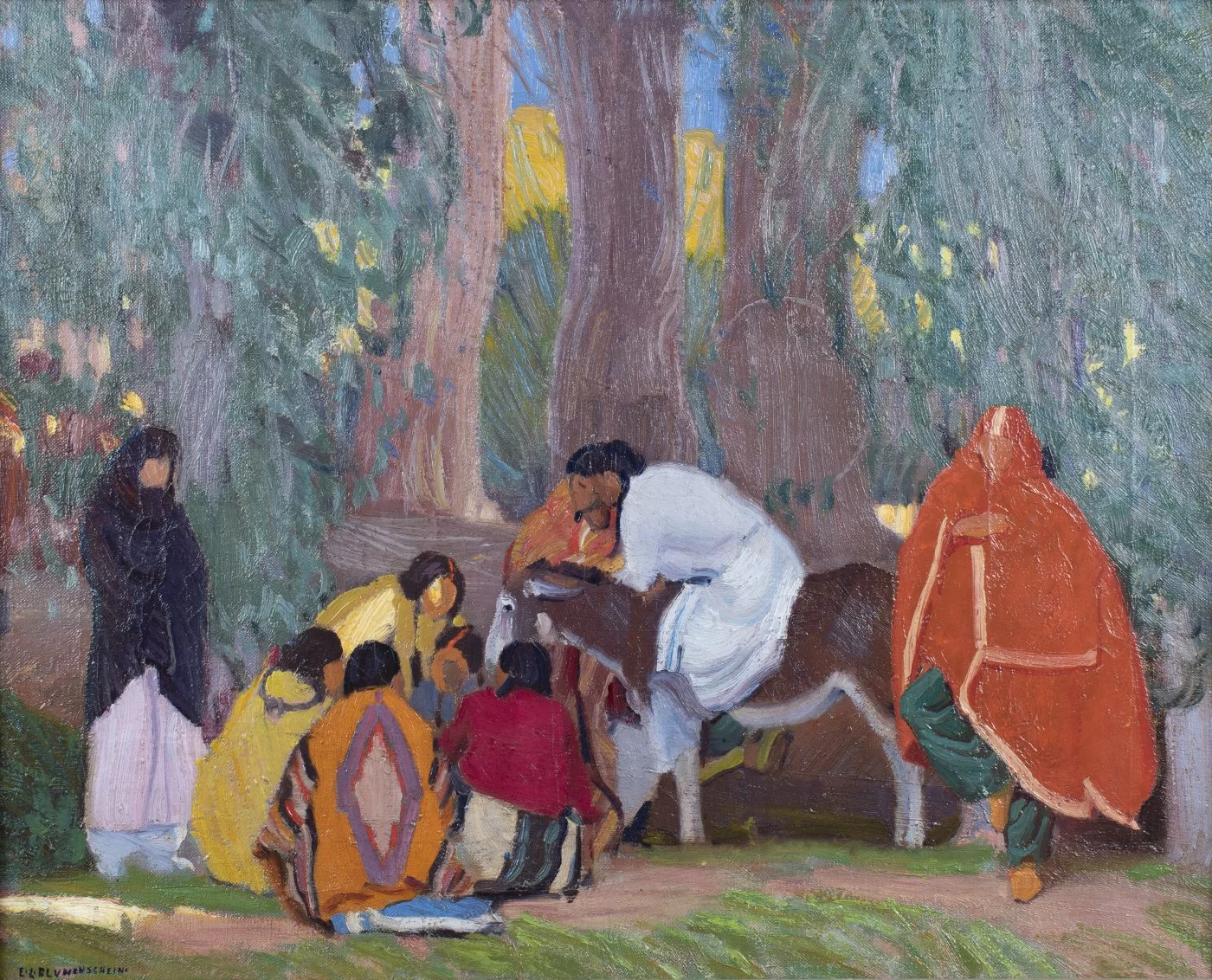
The Conference
1910, oil on canvas, 16 x 29 in. Courtesy of the Panhandle-Plains Historical Museum, Canyon, Texas.